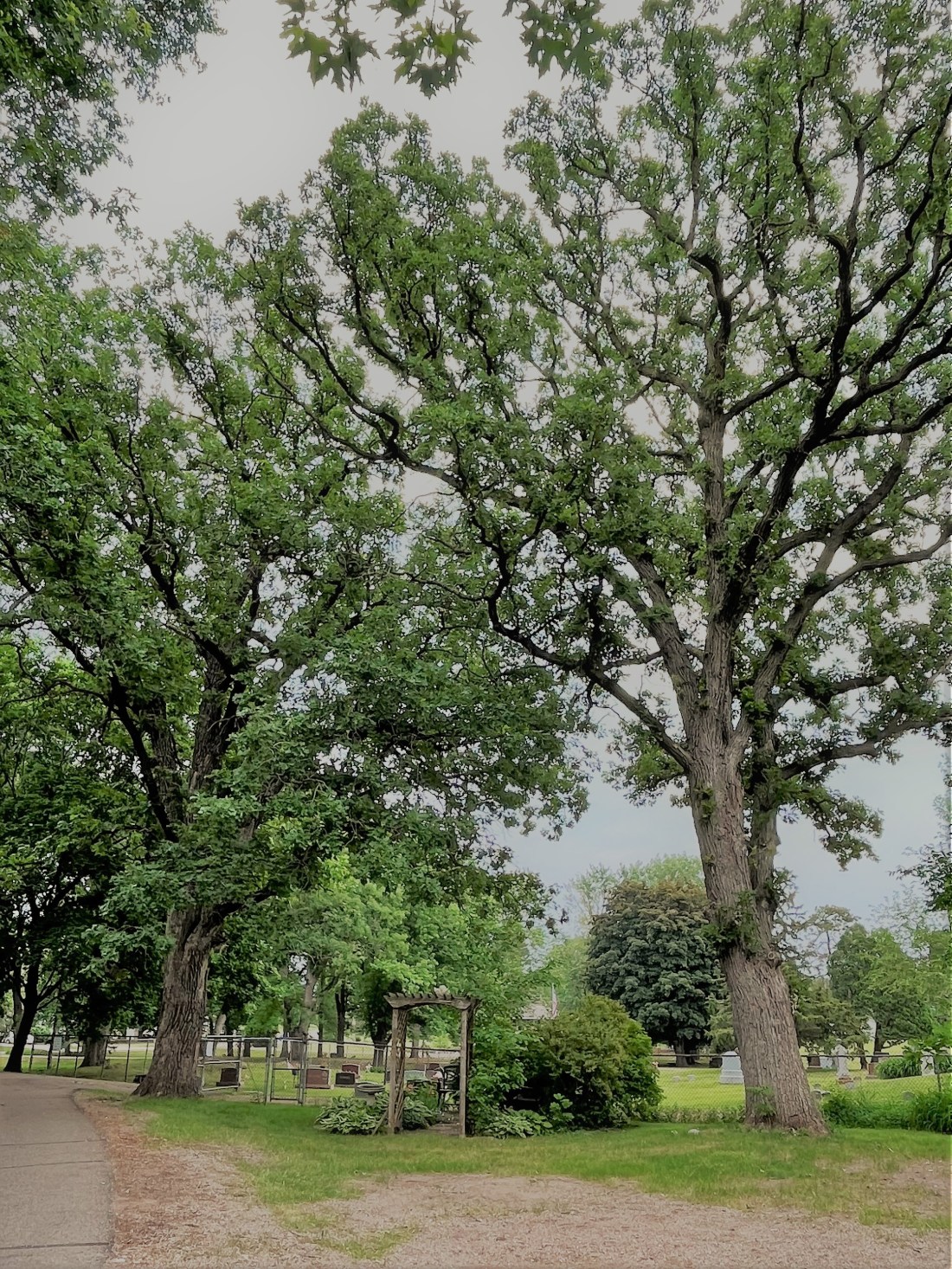
At a church in Woodbury, two bur oak trees have stood tall for more than 250 years. They’ve watched the land transition from prairie to farmland to busy suburbia and play so central a role in the story of the congregation that the people decided to call this place The Grove.
“This was originally Dakota land,” explains Wally Wadd, a member of the church who has been working with other volunteers to remove invasive buckthorn and replant the area beneath the oaks with native prairie-savanna species like pale purple coneflower, bee balm, butterfly weed, and prairie sage. “The U.S government signed a treaty with the Dakota in 1837 and, after that, German immigrants began to settle and farm here. Eventually, two farmers combined their land to create space for a church and cemetery.”
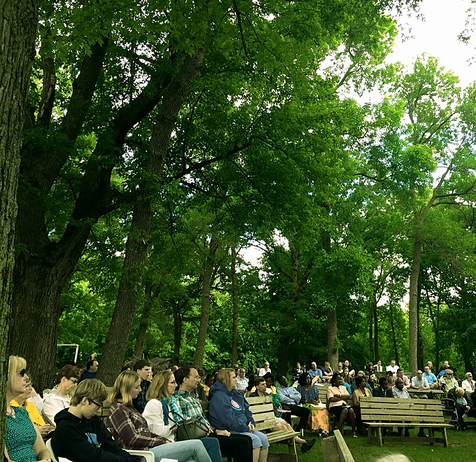
In the early years, the congregation spent more of its time outdoors than in. The church held revivals and weeklong camp meetings outdoors under the trees and says on its website today that, “the soil of the Grove is saturated with prayers from all the families…and the trees’ branches hold their hopes and dreams.”
Eventually, in 1868, members of the The Grove United Methodist Church built a permanent chapel with lumber from the nearby Tamarack Nature Preserve and stone that was mined from the St. Croix River Valley. The congregation grew as the region continued to develop. Even so, the people retained their connection to the grove and left detailed instructions for future generations on how to maintain, care for, and enjoy the trees and outdoor space at their church.

In recent years, Wadd has led The Grove’s volunteer efforts to restore its original oak savanna habitat. While taking classes to become a Minnesota Water Steward in 2021, he applied for and received a $500 plant grant from the South Washington Watershed District to remove invasive buckthorn and replant the area with native flowers and shrubs. The next year, Wadd received a second grant of $968 from Northwoods and Waters of the St. Croix Heritage Area to continue removing invasive species and cut down 14 ash trees that were infested with emerald ash borer (EAB). This spring, church members seeded the land beneath the oaks with a shortgrass savanna mix from Minnesota Native Landscapes, and planted elm leaf goldenrod, pale purple coneflower, rough blazingstar, bee balm, black chokeberry, and pagoda dogwood from Outback Nursery.

While giving a tour to a group of new Water Stewards in-training this June, Wadd shared a project storyboard his wife had recently created. “She began growing plants in milk cartons over the winter,” he explains. “Now she’s mapped out a beautiful vision for how we can landscape the area around the benches and create a rock garden, butterfly waystation, and native edible area.”
Much has changed in Woodbury over the past 250 years. For people at The Grove, however, two towering oaks continue to be their constant companions in this ever-changing world.

 East Metro Water